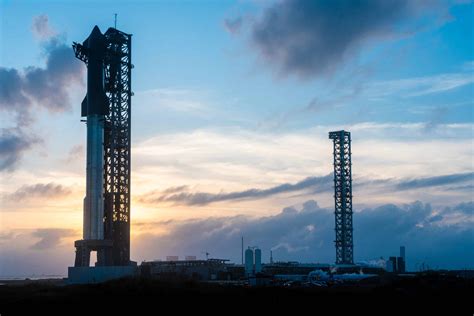
SpaceX Starship SN26: Unveiling Its Role & FutureLooking for the inside scoop on
SpaceX Starship SN26
? Well, you’ve landed in just the right spot, guys! Today, we’re diving deep into the fascinating world of SpaceX’s ambitious Starship program, specifically zeroing in on a crucial test article:
Starship SN26
. This isn’t just any piece of metal; it’s a testament to incredible engineering, relentless innovation, and humanity’s audacious dream of becoming a multi-planetary species. For those of you who might be new to the Starship saga, think of it as a monumental leap forward in space travel, promising fully reusable, super heavy-lift transportation for cargo and crew to the Moon, Mars, and beyond. This isn’t just about launching satellites; it’s about making space travel
commonplace
and
affordable
, fundamentally changing our relationship with the cosmos. The development process, as you might know, has been a rollercoaster of exhilarating successes and spectacular learning experiences – a philosophy that SpaceX founder Elon Musk often refers to as “rapid, iterative development.” This means they build, test, sometimes blow things up, learn from it, and then build an even better version, all at an unprecedented pace. It’s a method that flies in the face of traditional aerospace development, which often takes decades for a single vehicle.
SpaceX Starship SN26
, in this context, isn’t just a number; it represents a specific stage in this fast-paced evolution, playing a vital role in refining the design, testing critical systems, and ultimately, moving us closer to routine space exploration. We’re talking about a vehicle that’s designed to be completely reusable, from its colossal Super Heavy booster to the Starship upper stage itself, which is a game-changer for reducing launch costs. The sheer scale and ambition of this project are simply breathtaking, promising a future where trips to the Moon are regular occurrences and establishing a permanent human presence on Mars is a tangible goal, not just a sci-fi fantasy. So, buckle up as we explore why
Starship SN26
is more than just another test article; it’s a vital stepping stone on humanity’s journey to the stars. We’ll unpack its significance, its design philosophies, and what it means for the future of space exploration. This really is an exciting time to be following space, and
SN26
is right there at the forefront of the action. Its contributions are integral to the ongoing refinement of the Starship architecture, ensuring that future versions are robust, reliable, and ready for the most challenging missions.# The Engineering Marvel: Diving Deep into SN26’s DesignWhen we talk about
SpaceX Starship SN26
, we’re not just discussing a vehicle; we’re looking at a groundbreaking piece of engineering that challenges conventional wisdom in aerospace. What makes
Starship SN26
and its brethren so revolutionary, you ask? Well, it starts with the materials and the engines, guys. First off, let’s talk about the choice of material: stainless steel. Yup, you heard that right – not the exotic, lightweight carbon composites typically favored by aerospace engineers, but good old shiny stainless steel. This decision, initially met with some skepticism, has proven to be a stroke of genius for several reasons. For one, stainless steel is significantly cheaper than carbon composites, which aligns perfectly with SpaceX’s goal of reducing launch costs. More importantly, it performs exceptionally well at both extremely cold cryogenic temperatures (required for the liquid oxygen and methane propellants) and scorching high temperatures encountered during atmospheric re-entry. This thermal resilience simplifies the overall design, reducing the need for heavy and complex thermal protection systems. For
Starship SN26
, this material choice is fundamental to its structural integrity and reusability, allowing it to withstand the rigors of flight repeatedly. Then there are the engines: the powerful Raptor engines. These aren’t just any rocket engines; they are full-flow staged combustion engines, a highly efficient and complex design that maximizes performance. Each Raptor engine is capable of producing immense thrust, and a fully loaded Starship (like what
SN26
is helping to validate) will be powered by six of these beasts on the upper stage, with the Super Heavy booster featuring an even larger array. The efficiency of the Raptor engines is crucial for achieving orbital flight and, eventually, interplanetary travel, as it means more payload can be carried for the same amount of fuel. The development and testing of these engines, often integrated into vehicles like
SpaceX Starship SN26
, involve pushing the boundaries of propulsion technology.
SN26
itself acts as a critical testbed, not just for the engines, but for the intricate plumbing, avionics, and structural elements that support them. We’re talking about sophisticated fluid management systems, advanced thrust vectoring for steering, and robust engine controls. The ability to rapidly iterate on these components, thanks to the modular design and the quick-build nature afforded by stainless steel, allows SpaceX to learn and improve at an astonishing rate. From the welding techniques for its robust steel skin to the sophisticated internal pressurization systems and the complex electrical conduits, every aspect of
Starship SN26
’s construction is geared towards proving out the design principles for a truly reusable, high-performance space vehicle. It’s a marvel of modern engineering, blending pragmatic material choices with cutting-edge propulsion and a bold vision for the future of space travel. The data gathered from test articles like
SN26
directly informs the next generations, refining everything from structural resilience to operational efficiency, laying the groundwork for the future of deep space exploration. This truly highlights the incredible ingenuity behind the entire Starship program, making each test vehicle, including
SpaceX Starship SN26
, a key piece of the puzzle.# SN26’s Journey: A Key Player in Starship DevelopmentLet’s be clear, guys: every single Starship test article plays a pivotal role in the grand scheme of
SpaceX’s Starship development
, and
SpaceX Starship SN26
is no exception. While some earlier prototypes were famous for their dramatic hop tests – you know, flying a few kilometers up and then landing back down – vehicles like
SN26
represent a significant step change in the development path. By the time
SN26
came along, the focus had shifted from merely demonstrating the vertical take-off and landing (VTOL) capabilities of the Starship upper stage to preparing for much more ambitious integrated flight tests. This means combining the Starship upper stage with the colossal Super Heavy booster for a full-stack launch, aiming for orbital or near-orbital altitudes.
SN26
wasn’t just built to sit on a pad; it was conceived as a critical test article for validating a host of systems required for these complex, high-stakes missions. Its specific journey often involves rigorous ground testing. We’re talking about everything from cryo-proof tests, where the stainless steel tanks are filled with super-cold liquid nitrogen to simulate propellant loads and check for structural integrity under extreme stress, to engine fit checks and static fire tests. Static fire tests are particularly exciting because they involve igniting the Raptor engines while the vehicle remains anchored to the ground. This allows engineers to collect invaluable data on engine performance, thrust vector control, and the interaction of the engines with the vehicle’s systems without the added complexity of flight. For
SpaceX Starship SN26
, these ground tests are absolutely crucial, as they help identify any potential issues or areas for improvement before attempting a full flight. Think of it as practice runs before the big game; every piece of data collected helps refine the design and operational procedures. It’s also worth noting that the
SN
series (Serial Number) prototypes, including
SN26
, have been instrumental in refining manufacturing processes at Starbase, SpaceX’s private launch facility in Boca Chica, Texas. The rapid assembly and disassembly of these prototypes have allowed SpaceX to streamline their production line, develop new welding techniques, and perfect their ability to churn out these massive rockets quickly and efficiently. Each iteration, including the specific lessons learned from the construction and testing of
SN26
, feeds directly into the next, allowing for continuous improvement. The goal here is to establish a robust and reliable production system that can eventually build a fleet of Starships. The contribution of
SN26
and its predecessors is invaluable, laying the technical and operational groundwork for the future of fully reusable, deep-space transportation. It’s truly a testament to iterative development, where each vehicle, including
SpaceX Starship SN26
, moves the needle forward, inch by painful, glorious inch. Its role isn’t just about flight; it’s about proving the entire system’s readiness for the ambitious goals ahead, making it an indispensable part of this epic space saga. Without these intermediate steps and detailed tests, the ultimate orbital and interplanetary missions simply wouldn’t be possible. Therefore,
SN26
’s journey, though perhaps not as publicly visible as a full flight, is absolutely critical to the success of the broader Starship program.# Looking Ahead: The Future of Starship Beyond SN26Alright, so we’ve talked about
SpaceX Starship SN26
and its current role, but what’s the bigger picture, guys? Where is this incredible
Starship development
heading, and what does it mean for humanity’s future in space? Beyond individual test articles like
SN26
, the ultimate vision for Starship is nothing short of revolutionary. We’re talking about establishing a permanent, self-sustaining human presence on Mars, building bases on the Moon, and enabling rapid point-to-point travel anywhere on Earth. Imagine hopping on a Starship and being able to reach the other side of the planet in under an hour – that’s the kind of future Elon Musk envisions, and vehicles like
SN26
are the direct ancestors of the craft that will make it happen. The key technologies that
SN26
helps to validate, such as the robust stainless steel structure and the hyper-efficient Raptor engines, are fundamental to achieving these audacious goals. But there are still significant hurdles to overcome. One of the biggest challenges, and a core part of the future of Starship, is orbital refueling. For Starship to reach Mars or carry substantial payloads to the Moon, it will need to be refueled in Earth orbit by multiple tanker Starships. This is an incredibly complex ballet of rendezvous and docking maneuvers, requiring precise control and reliable systems, all built upon the foundational data gathered from tests involving vehicles like
SpaceX Starship SN26
. The ability to refuel in orbit is a game-changer, unlocking capabilities that were previously impossible with single-launch vehicles. Think about it: sending hundreds of tons of cargo and dozens of people to Mars requires an immense amount of propellant, far more than can be lifted in a single launch from Earth’s surface. Orbital refueling is the secret sauce that makes the whole Mars mission architecture feasible. Furthermore, the development of the Super Heavy booster, which will launch Starship, is equally critical. It’s an even larger beast than Starship itself, designed for rapid, fully reusable operations, landing back near the launch site after lofting Starship towards orbit. The integrated testing of Starship and Super Heavy is where the magic truly happens, and every lesson learned from prototypes like
SN26
informs the design and operation of both stages. The future of Starship also includes a strong emphasis on reducing turnaround times. For Starship to be truly revolutionary, it can’t take months or years to prepare for its next flight; it needs to be ready in days, perhaps even hours. This requires robust, durable components, easy access for maintenance, and highly automated launch and landing systems – all areas where the iterative
Starship development
process, heavily reliant on early test vehicles, continues to make strides. The impact of Starship, built on the foundations laid by prototypes like
SpaceX Starship SN26
, extends beyond just space exploration. It has the potential to kickstart a new space economy, enable space tourism on an unprecedented scale, and perhaps even provide solutions to some of humanity’s most pressing challenges here on Earth by fostering new industries and scientific discoveries. It’s a future that’s being meticulously crafted, one test article, one static fire, and one launch at a time, with
SN26
serving as a vital stepping stone towards these incredible aspirations. The progress is tangible, and the excitement for what lies ahead is absolutely palpable, thanks to the continuous advancements driven by vehicles like this one. # Why Starship SN26 Matters to
Us
(And the World!)So, why should a specific test article like
SpaceX Starship SN26
matter to you, to me, or to anyone beyond the engineers at SpaceX? Well, guys, it’s simple:
Starship SN26
isn’t just a number; it’s a proxy for progress, a symbol of human ingenuity, and a tangible step towards a future that used to belong solely to science fiction. Every piece of data collected from its ground tests, every challenge overcome in its construction, directly contributes to realizing humanity’s boldest dreams. Think about the grander vision: a future where space travel is routine, where scientific discovery is accelerated by accessible space labs, and where the human species has a genuine backup plan on another planet. This isn’t just about rockets; it’s about pushing the boundaries of what’s possible, inspiring new generations of scientists, engineers, and dreamers. The very existence and ongoing
Starship development
efforts, in which
SN26
plays a part, have already spurred innovation across various industries, from materials science to advanced manufacturing. It’s a catalyst for technological advancement that has ripple effects far beyond the launch pad. Moreover, the open and rapid iterative development approach that defines the Starship program, heavily showcased through vehicles like
SN26
, is a powerful lesson in problem-solving and perseverance. It teaches us that failure isn’t an end; it’s a stepping stone, a data point that leads to improvement. This philosophy, applied to any field, can drive incredible progress. Ultimately,
SpaceX Starship SN26
, and the entire Starship program, represents our collective drive to explore, to learn, and to expand our horizons. It’s about securing the long-term future of humanity, not just on Earth, but among the stars. So next time you hear about Starship, remember SN26 and its brethren, as they are the very real, very tangible stepping stones guiding us towards that incredible multi-planetary future. It’s a journey we’re all, in some way, a part of, and the progress made by these test vehicles is a testament to what we can achieve when we aim high, together.
