Master Day Trading: Pivot Points & Price Action Secrets\n\nHey there, future trading gurus! Ever wondered how some folks consistently nail their entries and exits in the wild world of day trading? Well, you’ve landed in the right spot because today, we’re diving deep into an incredibly powerful combination that many
professional traders swear by
:
day trading with pivot points and price action
. This isn’t just about reading a chart; it’s about understanding the market’s heartbeat, predicting its next move, and leveraging simple yet profound tools to put the odds in your favor. Forget those complicated, indicator-heavy setups that just clutter your screen and confuse your mind. We’re talking about a clean, robust, and highly effective approach that, when mastered, can truly transform your trading game. Whether you’re a newbie just dipping your toes into the fast-paced waters of day trading or a seasoned trader looking to refine your strategy, this guide is packed with invaluable insights, practical tips, and a friendly, casual vibe to make learning enjoyable. So, grab your favorite beverage, settle in, and let’s unlock the secrets to mastering the markets together. We’re going to explore what makes pivot points so crucial, how
price action
allows you to read the market’s intentions, and most importantly, how to seamlessly integrate these two phenomenal concepts to create a truly potent
day trading strategy
. This isn’t just theory, guys; it’s about practical application that can help you identify high-probability trades, manage your risk effectively, and build that confidence every successful day trader needs. By the time we’re done, you’ll have a much clearer roadmap for navigating the volatile, yet opportunity-rich, landscape of day trading, armed with a powerful duo:
pivot points
and
pure price action
. Let’s get this show on the road!\n\n## Decoding Day Trading: Your Path to Market Mastery\n\nAlright, guys, before we dive into the nitty-gritty of
pivot points and price action
, let’s make sure we’re all on the same page about what
day trading
actually is and why it fascinates so many. At its core, day trading involves buying and selling financial instruments – think stocks, forex, futures, or even cryptocurrencies – within the same trading day. The goal? To profit from small, short-term price fluctuations. Unlike long-term investors who might hold positions for weeks, months, or years, day traders close all their positions before the market closes, avoiding overnight risks. It’s fast-paced, requires intense focus, and can be incredibly exhilarating (and, let’s be honest, sometimes frustrating!).\n\nSo, why would anyone choose this high-stress, high-reward path? Well, the potential for quick profits is definitely a huge draw. Imagine making your weekly salary in just a few hours! But it’s not all sunshine and rainbows. The
rollercoaster ride
of day trading comes with significant risks. You can lose money just as quickly as you can make it, sometimes even faster if you’re not careful. That’s why having a solid
day trading strategy
, like the one we’re discussing with
pivot points and price action
, is absolutely paramount. It’s not gambling; it’s a skill that combines analysis, discipline, and constant learning. Folks who succeed in day trading aren’t lucky; they’re prepared, analytical, and emotionally disciplined. They understand that while the rewards can be substantial, so are the challenges. This is precisely why we’re focusing on tools that offer clear, objective insights, helping to cut through the noise and emotional biases that often trip up new traders.\n\nPerhaps the most crucial, yet often overlooked, aspect of day trading is the
mindset of a day trader
. This isn’t just about charts and indicators; it’s about psychological resilience. You’re going to face losses – that’s a guarantee. The market doesn’t care about your feelings, your rent, or your trading account balance. What matters is how you react to those losses. Do you chase trades? Do you get angry and over-leverage? Or do you stick to your plan, learn from your mistakes, and maintain emotional control? Successful traders cultivate a mindset of
discipline, patience, and unwavering focus
. They treat trading like a business, not a casino. They understand their risk per trade, they don’t overtrade, and they continuously refine their approach. This emotional stability is often what separates the consistent winners from those who churn through accounts. When you’re using objective tools like
pivot points
and clear
price action
signals, it helps reinforce this disciplined approach, giving you concrete reasons for your decisions rather than relying on gut feelings. It’s a journey, not a destination, and developing this mental fortitude is just as important as understanding any technical analysis concept. Truly, guys, this foundation is non-negotiable for anyone serious about making day trading a sustainable endeavor.\n\n## Unlocking Market Secrets with Pivot Points\n\nAlright, let’s dive into one of our foundational tools for
day trading
:
pivot points
. So, what exactly are these mysterious lines? Simply put, a
pivot point
is a technical analysis indicator derived by calculating the average of the high, low, and closing prices of a security from the previous trading period. Sounds simple, right? But their power lies in their ability to act as significant levels of
support and resistance
, helping traders identify potential turning points or areas of strong price action. Think of them as magnetic zones where the market tends to react, either bouncing off them or breaking through with momentum. There are several types of pivot points –
Standard, Fibonacci, Woodie, Camarilla, and Demark
– each with slightly different calculation methods, but for most day traders, the
standard pivot point
calculation is a fantastic place to start due to its widespread recognition and ease of use. These points are typically calculated at the start of a new trading day, providing a fresh set of levels that remain static throughout the session, unlike moving averages that constantly change.\n\nThese
pivot points
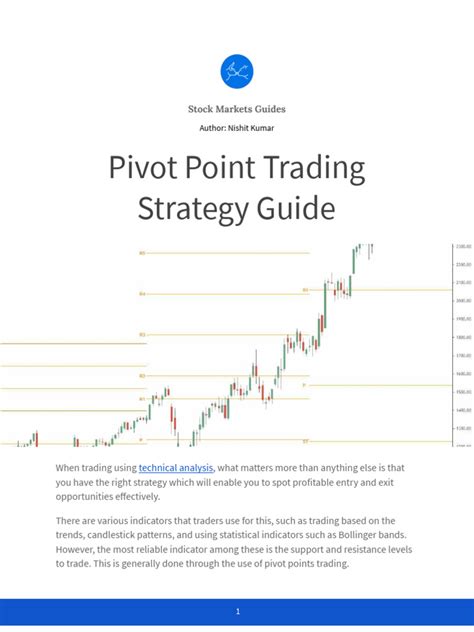
are not just arbitrary lines on a chart; they are levels that many institutional traders and algorithms watch closely. Because so many market participants are observing them, they often become self-fulfilling prophecies. Price tends to respect these levels. A central pivot point (PP) is typically flanked by three levels of resistance (R1, R2, R3) above it and three levels of support (S1, S2, S3) below it. These levels are derived from the same base calculation and provide a tiered structure of potential turning points. When the price approaches R1, for instance, it’s often a signal for potential selling pressure or profit-taking. Conversely, S1 might indicate buying interest. Learning
how to interpret these levels
is a critical skill for any
day trading strategy
relying on structure and clear boundaries. When price reacts to these levels, especially with strong
price action
signals, it gives us a higher probability setup, which is exactly what we’re after in our combined strategy. Folks, these aren’t just lines; they are roadmaps for the day’s potential price movements.\n\nBeyond acting as simple support and resistance,
pivot points
can also serve as powerful
entry and exit signals
when combined with other forms of analysis. For instance, if a stock is trading above the central pivot point, it generally suggests a bullish sentiment for the day, and traders might look for buying opportunities on pullbacks to the pivot or S1. Conversely, trading below the central pivot often signals a bearish bias. Imagine you see price breaking above R1 with significant momentum, and then it
retests
R1, holding it as new support. This could be a fantastic entry point for a long trade, especially if confirmed by a bullish candlestick pattern, which leads us beautifully into our discussion of price action. These levels provide a clear context for your trades, helping you decide not just
where
to enter, but also
where to set your stop-loss
(often just beyond the next pivot level) and
where to take profits
(at subsequent resistance levels). This structured approach to entries and exits removes much of the guesswork, making your
day trading
decisions more objective and systematic. It’s all about finding confluence – multiple signals aligning – and pivot points offer a fantastic framework for that, giving us a robust foundation upon which to build our strategy with price action. So, remember, guys, these dynamic levels are your first line of defense and offense in the daily market battle.\n\n## Mastering Price Action: Reading the Market’s Story\n\nNow that we’ve got a solid handle on
pivot points
, let’s talk about their incredibly powerful partner:
price action
. What exactly is
price action trading
? Simply put, it’s the analysis of market movements based solely on the historical and current price of a security, without the use of lagging indicators. It’s about
reading the raw language of the market
as it unfolds on your chart, primarily through candlestick patterns and chart formations. Think of price action as the market’s direct communication to you, telling a story about the balance between buyers and sellers. When you master price action, you learn to interpret this story, anticipating potential future movements with a high degree of probability. This isn’t just about memorizing patterns, guys; it’s about understanding the psychology behind each candle and each formation. Is there strong buying pressure? Is selling momentum fading? Is the market consolidating before a big move? Price action gives you these answers in real-time, making it an invaluable component of any successful
day trading strategy
, especially when paired with the structural clarity offered by pivot points. It’s the art of seeing the invisible forces at play and making informed decisions based on what price itself is telling you.\n\nOne of the best ways to interpret price action is through
candlestick chronicles
– those little rectangular bodies with wicks that paint a vivid picture of price movement within a specific timeframe. Key patterns to watch out for include the
Doji
, which signals indecision in the market, often appearing at market turning points; the
Hammer
(and its inverted cousin), a bullish reversal pattern found after a downtrend; and
Engulfing patterns
(both bullish and bearish), which indicate a strong shift in momentum as a large candle completely
