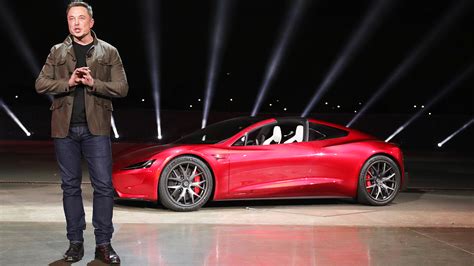
Elon Musk: Unveiling His Next Big Auto Innovation\n\n## The Unending Quest for Automotive Revolution: What’s Next for Elon Musk?\nHey guys, get ready to dive deep into the mind of
the
Elon Musk
! When we talk about the
automotive revolution
, one name immediately springs to mind, doesn’t it? It’s
Elon Musk
, a man who consistently pushes the boundaries of what’s possible, not just in electric vehicles but across a multitude of industries. From reusable rockets with SpaceX to neurotechnology with Neuralink, and even tunneling solutions with The Boring Company, his ventures are always about reimagining the future. So, what’s
next
for this visionary leader in the automotive space? Is there a new
OSCOMobile
concept lurking in the shadows, or perhaps a radical pivot that will once again send shockwaves through the industry? We’ve seen him transform transportation with Tesla, making electric cars not just viable but desirable, high-performance machines. He took a skeptical world and showed us that EVs could be
cool
, fast, and environmentally friendly all at once. The initial Roadster, then the Model S, X, 3, Y, and the Cybertruck – each launch has been a masterclass in challenging the status quo and igniting global conversations. But here’s the kicker: Musk is never one to rest on his laurels. His mind is always churning, looking for the
next big innovation
, the
next frontier
to conquer. This relentless pursuit of progress is what makes anticipating his future moves so incredibly exciting. Could \“OSCOMobile\” signify a groundbreaking new vehicle type, perhaps something that blends land and air travel, or a fully integrated smart mobility system that goes beyond simple self-driving cars? Imagine a scenario where your vehicle isn’t just a mode of transport but a seamlessly connected node in a vast, intelligent network, anticipating your needs and optimizing your journey in ways we can only dream of today. He’s not just building cars; he’s building an
ecosystem
designed to accelerate humanity’s transition to a sustainable future, and perhaps even a multi-planetary existence. The question isn’t
if
he’ll innovate again, but
how
and
when
he’ll drop the next bombshell that redefines our understanding of personal mobility. His track record speaks volumes, guys – prepare for something truly
groundbreaking
. He’s not just chasing profit; he’s chasing a
vision
where technology serves humanity on an unprecedented scale, making life on Earth better and extending our reach to the stars. This commitment to a grand, overarching goal is what fuels his automotive revolution and keeps us all on the edge of our seats.\n\n## Decoding Elon Musk’s Vision: Beyond Electric Vehicles\nLet’s get real for a second, guys –
Elon Musk’s vision
extends far
beyond electric vehicles
alone. While Tesla is certainly his most visible automotive venture, it’s crucial to understand that all his companies are, in some way, interconnected, forming a sprawling web of innovation aimed at solving some of humanity’s biggest challenges. Think about it: SpaceX is about making humanity multi-planetary, which requires immense engineering and manufacturing prowess, much like building a car. Neuralink aims to merge human brains with AI, potentially revolutionizing how we interact with technology, including our vehicles. The Boring Company is digging tunnels to alleviate urban traffic congestion, suggesting a future where vehicles might travel underground at high speeds. This holistic approach means that any
next big auto innovation
from Musk, possibly our speculated \“OSCOMobile,\” won’t just be a car; it’ll be a component of a much larger,
integrated technology
ecosystem. Imagine a future where your autonomous Tesla navigates city tunnels built by The Boring Company, powered by solar energy stored in Tesla Powerwalls, with destination data seamlessly uploaded via a Neuralink interface. Sounds like science fiction, right? But with Musk, yesterday’s sci-fi is often tomorrow’s reality. The convergence of artificial intelligence, sustainable energy, and advanced infrastructure is at the heart of his
future of mobility
plans. He’s not content with just making cars electric; he wants them to be
intelligent
,
self-aware
, and
seamlessly integrated
into our daily lives. This means leveraging cutting-edge AI for full self-driving capabilities, not just as a convenience, but as a safety feature that could drastically reduce accidents and congestion. Furthermore, the push for sustainable energy isn’t just about reducing emissions; it’s about creating a closed-loop system where transportation, energy generation, and storage work in harmony. This kind of thinking, where everything is part of a grand design, is what sets Musk apart. His ultimate goal is to accelerate the world’s transition to sustainable energy and to make humanity a multi-planetary species. Any new automotive venture would undoubtedly align with these overarching missions, becoming another powerful tool in his arsenal to reshape our civilization. So, when we ponder \“OSCOMobile,\” we’re not just thinking about a car; we’re contemplating a piece of a much grander, more audacious puzzle that could fundamentally alter how we live, work, and move. It’s an exciting, albeit ambitious, landscape, and guys,
we’re all invited to witness its unfolding
.\n\n### The Hyperloop Connection: A Glimpse into Ultra-High-Speed Travel\nAlright, let’s zoom in on a specific, mind-blowing part of
Elon Musk’s innovations
that could very well hint at the essence of \“OSCOMobile\”: the
Hyperloop
. Remember when Musk first unveiled the Hyperloop concept? It felt like something out of a futuristic movie, right? The idea of traveling in pods through near-vacuum tubes at speeds exceeding 700 miles per hour – that’s faster than most planes, folks – was utterly
revolutionary
. It promised to fundamentally change inter-city travel, reducing hours-long journeys to mere minutes. While not directly a Tesla project, the Hyperloop concept, championed by The Boring Company, perfectly embodies Musk’s drive for
ultra-high-speed travel
and reimagining
future transportation
. Imagine if \“OSCOMobile\” wasn’t just a car on existing roads, but a vehicle designed to
interface directly
with a Hyperloop system. Your personal pod-like vehicle could drive you from your home to the Hyperloop station, then seamlessly dock and accelerate you across vast distances, only to emerge at your destination city where it would then autonomously drive you to your final doorstep. This kind of integrated, multimodal transport system is exactly the sort of ambitious, interconnected thinking that defines Musk’s ventures. It’s not just about getting from A to B; it’s about making that journey
faster
,
safer
, and
more efficient
than anything we’ve ever conceived. The Hyperloop’s potential to alleviate traffic congestion, reduce travel times, and provide an environmentally friendly alternative to air travel is immense. It leverages sustainable energy and advanced engineering to create a solution that feels both practical and wildly futuristic. The engineering challenges are, of course, significant, but the progress made by various Hyperloop ventures (like Virgin Hyperloop One and Hyperloop Transportation Technologies) shows that the concept is moving from theoretical to tangible reality. If \“OSCOMobile\” were to integrate with this vision, it would represent a quantum leap in personal mobility, blurring the lines between private vehicle ownership and public transport in a truly groundbreaking way. This isn’t just about faster cars; it’s about a complete paradigm shift in how we perceive and execute travel, making long-distance journeys as effortless as a short drive to the grocery store. Guys,
this
is the kind of
game-changing innovation
that keeps us glued to Musk’s every move, wondering what incredible future he’s building next for us all.\n\n### AI and Autonomy: The Brain Behind the Wheel\nNow, let’s talk about the
brain
of the operation, guys:
AI and autonomy
. When it comes to
Elon Musk’s tech
, the advancements in artificial intelligence and autonomous driving are absolutely central to his
future of vehicles
. Tesla’s
Full Self-Driving (FSD)
software is perhaps the most ambitious and widely discussed autonomous driving system in the world. It’s not just about lane keeping or adaptive cruise control; it’s about teaching a car to navigate complex urban environments, handle intersections, read traffic signs, and respond to unpredictable human behavior, all without human intervention. This pursuit of true autonomy is a cornerstone of Musk’s vision for the future of transportation. He believes that autonomous vehicles will drastically reduce accidents, alleviate traffic congestion, and free up countless hours that people currently spend driving. Imagine a world where your \“OSCOMobile\” can pick you up, drop you off, and then go earn money as a robotaxi, or perhaps even seamlessly integrate with a Hyperloop system as we just discussed. This level of autonomy requires incredibly sophisticated AI – neural networks trained on vast amounts of real-world driving data, capable of making split-second decisions and continuously learning. Beyond FSD, Musk’s work with
Optimus
, Tesla’s humanoid robot, further illustrates his commitment to
advanced robotics
and AI. Optimus isn’t just a gimmick; it’s a platform designed to perform repetitive, dangerous, or mundane tasks, potentially even within future factories that build our \“OSCOMobiles\” or even acting as personal assistants that can interact with our smart vehicles. This fusion of vehicle autonomy and advanced robotics suggests a future where our cars aren’t just transportation devices, but intelligent companions. They will understand our routines, anticipate our needs, and seamlessly integrate into our smart homes and digital lives. The safety implications alone are monumental; with AI, the potential to eliminate human error, which is the cause of the vast majority of accidents, is within reach. This future isn’t without its challenges – regulatory hurdles, ethical considerations, and the sheer complexity of perfecting such systems are immense. But Musk’s unwavering belief in the power of AI to transform our lives, coupled with Tesla’s relentless pursuit of FSD, means that the brain behind the wheel is only going to get smarter, more capable, and more integrated into our daily existence. Guys,
this
is where the rubber meets the road, quite literally, in shaping a truly autonomous and intelligent
future of vehicles
.\n\n## Sustainability and Impact: Shaping the Future of Transport\nLet’s get down to brass tacks, folks, about the core driver behind so much of
Elon Musk’s mission
:
sustainability and impact
. It’s not just about cool gadgets or faster cars; it’s about fundamentally
shaping the future of transport
in a way that benefits humanity and our planet. From day one, Tesla’s primary goal has been to accelerate the world’s transition to sustainable energy. This isn’t just a marketing slogan; it’s a deeply ingrained philosophy that permeates every aspect of his ventures. The push for electric vehicles isn’t merely about creating a better driving experience; it’s about drastically reducing our reliance on fossil fuels, mitigating climate change, and improving air quality in our cities. The
environmental benefits
of this transition are immense, and Musk has been a tireless champion in proving that sustainable alternatives can be superior in performance, safety, and desirability. Think about it: a world powered entirely by renewable energy, where every vehicle, every home, and every industry runs on clean power. That’s the grand vision. Tesla Energy, with its solar panels and Powerwall battery storage systems, is another critical piece of this puzzle, providing the infrastructure to generate and store that clean energy. If an \“OSCOMobile\” were to emerge, it would undoubtedly be a beacon of this sustainable ethos. It wouldn’t just be an electric car; it would be designed with maximum energy efficiency, potentially even integrating novel charging solutions or having the ability to feed power back into the grid, further reinforcing a decentralized, resilient energy system. Musk often talks about the importance of humanity becoming a multi-planetary species, not as an escape, but as a long-term insurance policy. However, before we look to Mars, he’s focused on making Earth as sustainable as possible. His companies are working in concert to create a future where our transportation systems are clean, efficient, and interconnected, reducing our carbon footprint and preserving our planet for future generations. This holistic approach, where sustainable energy, advanced technology, and innovative infrastructure converge, is what makes his work so incredibly impactful. He’s not just building products; he’s building a future where humanity can thrive both on and off Earth, powered by
clean energy
and driven by a profound sense of responsibility. Guys,
this
commitment to a healthier, more sustainable planet is arguably the most significant aspect of
Elon Musk’s mission
, making any new automotive unveiling not just exciting for tech enthusiasts, but critical for the well-being of us all.\n\n## Challenges and Criticisms: The Road Less Traveled\nOkay, so we’ve talked a lot about the incredible potential and the mind-blowing innovations, but let’s be real, guys: the road
Elon Musk’s ventures
travel is often the
road less traveled
, and it’s absolutely packed with
challenges and criticisms
. It’s not all smooth sailing and rocket launches; there are significant hurdles that must be overcome, and Musk himself is no stranger to public scrutiny and skepticism. One of the biggest challenges for any ambitious company, especially in the automotive sector, is
production hurdles
. Tesla, for all its success, has faced its fair share of \“production hell\” with various models. Scaling up manufacturing, ensuring quality control, and meeting demand for cutting-edge technology is incredibly difficult. Imagine the complexities involved in producing something as revolutionary as our hypothetical \“OSCOMobile\”! These aren’t just minor inconveniences; they can lead to delays, cost overruns, and sometimes even dent public confidence. Then there’s
regulatory scrutiny
. Developing self-driving cars, let alone something that might integrate with high-speed tunnels or even fly, means navigating a labyrinth of existing laws and regulations that were simply not designed for such advanced technology. Governments and safety organizations are naturally cautious, and rightly so, when it comes to technologies that could impact public safety. This means a slower pace of innovation than perhaps Musk would prefer, and often requires extensive testing, certifications, and lobbying efforts. Financial pressures are another constant. Developing groundbreaking technology, building gigafactories, and expanding global infrastructure requires
massive
capital investment. While Tesla is now profitable, its early years were a constant battle against the clock and the balance sheet. Skeptics often point to ambitious timelines that are sometimes missed or features that take longer to implement than initially promised. And let’s not forget the man himself – Elon Musk. His outspoken nature, controversial tweets, and sometimes unconventional management style often draw intense media attention, both positive and negative. While this keeps him in the public eye, it also means his companies are under a constant microscope, and any misstep is amplified. However, it’s also true that these challenges often fuel innovation. The pressure to overcome
production hurdles
, to meet
regulatory scrutiny
, and to silence the critics often pushes his teams to find truly inventive solutions. So, while the journey for any
future of innovation
from Musk will be tough, it’s precisely these obstacles that often forge the most resilient and ultimately successful companies. Guys, it’s a constant battle, but that’s the price of pushing the boundaries of what’s possible.\n\n## What Does This Mean for Us, Guys? The Future is Now\nAlright, so after diving deep into all these possibilities and challenges, let’s bring it back home and ask:
What does this mean for us, guys?
The truth is,
Elon Musk’s legacy
isn’t just about building electric cars or sending rockets to space; it’s about fundamentally altering our perception of what’s possible and accelerating the arrival of a future that once seemed like pure fantasy. When we talk about a potential \“OSCOMobile\” or any
next big thing
from his diverse portfolio, we’re not just discussing new products; we’re talking about advancements that will have a direct and profound
impact on daily life
. Imagine a world where your commute is no longer a stressful, time-consuming chore but a productive or relaxing period in an autonomous, interconnected vehicle. Picture cities with significantly less air pollution and noise thanks to pervasive electric transport. Envision inter-city travel becoming so fast and efficient that living further from your workplace becomes a viable, stress-free option. These aren’t just pipe dreams; they are the tangible outcomes of the relentless pursuit of innovation championed by Musk and his teams. His efforts push not just his own companies, but entire industries forward. Competitors are forced to innovate, governments are compelled to adapt regulations, and public awareness about critical issues like climate change and sustainable energy is dramatically heightened. We are truly
embracing innovation
at an unprecedented pace, thanks in large part to his audacious vision. For us, as consumers and citizens, it means a future filled with increasingly sophisticated, safe, and sustainable choices for how we move, how we power our lives, and how we interact with technology. It means a future where the lines between science fiction and reality blur even further, and where the potential for human progress feels limitless. Of course, with great innovation comes great responsibility, and it’s up to all of us to engage with these technologies thoughtfully, ensuring they serve the greater good. But one thing is for certain:
the future is now
, and Elon Musk continues to be one of its most prominent architects. So, stay tuned, guys, because if history is any indicator, the next announcement from this visionary is bound to be something that once again leaves us all saying, \“Whoa, did you see that?\” This is more than just tech; it’s a movement towards a better, more advanced human experience.
